History
From hazel grove to railway village
Hasland's name is Old English for hazel grove — first attested in writing as Haselont around 1130. The settlement itself doesn't appear in the Domesday Book of 1086; only Boythorpe, then a separate hamlet within the township, is named. But Hasland was already an established farming community on the southern edge of the medieval parish of Chesterfield, and the township was much larger than today's village — originally taking in Corbriggs, Winsick, Grassmoor, Birdholme and the south end of Boythorpe.
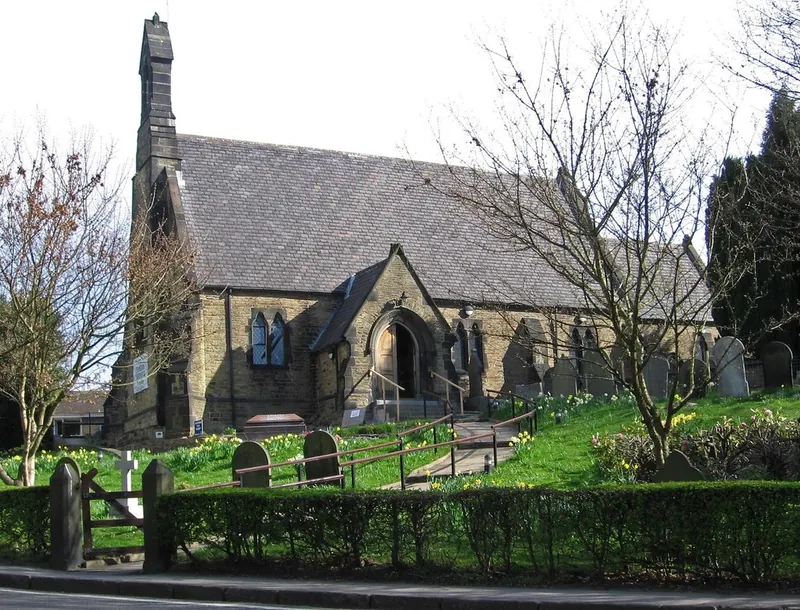
The 19th century rewrote the place. Coal was sunk on the Heathcote estate in three pits — Hasland, Whitebank and Storforth Lane — and by 1875 they had been linked underground so that the output of all three could be wound at Storforth Lane. That same year the Midland Railway opened a major locomotive shed at Hasland, eventually home to as many as sixty engines. Terraces of railway and miners' cottages went up to house the workforce, and schools, chapels and the parish church of St Paul's (consecrated 1850) followed.
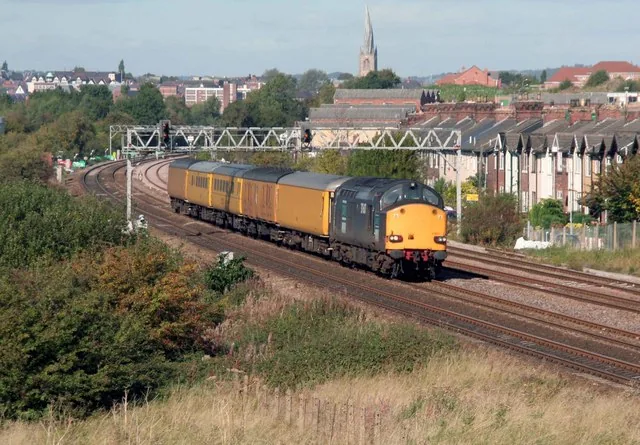
Hasland's boundaries shrank as Chesterfield grew. In March 1894 the borough absorbed 431 houses from the parish, with further extensions in 1910 and 1920. The collieries ran down through the early 20th century, mining subsidence damaged the engine shed roof through the 1950s, and the depot finally closed in October 1964 after 89 years. Local-government reorganisation in 1974 folded what remained firmly into the Borough of Chesterfield. The pits and the sheds are gone, but the layout they left behind — the terraces, the park, the high street and the parish church — is still very much the Hasland of today.